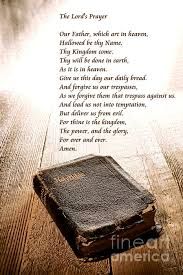
(Matthew 6 : 9‑13 / Luke 11 : 2‑4)
1. Πάτερ ἡμῶν ὁ ἐν τοῖς οὐρανοῖς — “Our Father who art in the heavens.”
The opening word Pater (Aramaic Abba, Hebrew Avinu) is both intimacy and awe.
It names origin, not distance. “In the heavens” (en tois ouranois) is plural—heavens within heavens—signifying layered consciousness rather than remote geography.
To pray thus is to awaken to belonging: the Infinite is familial.
Heaven is not elsewhere; it is the interior altitude where the soul remembers its Source.
2. Ἁγιασθήτω τὸ ὄνομά σου — “Hallowed be Thy Name.”
The verb hagiasthētōmeans “let it be made holy,” not because the Name lacks holiness, but because the world forgets it.
In Hebrew thought, Shem (Name) equals essence.
To hallow the Name is to align creation with its original vibration.
Every breath that speaks the divine Name re‑sanctifies the cosmos; holiness is remembrance made audible.
3. ἐλθέτω ἡ βασιλεία σου — “Thy Kingdom come.”
Basileia derives from basileus, “sovereign order.”
This is not a political realm but the dynamic reign of divine harmony.
The verb elthētō (let it come) carries the sense of emergence—Heaven flowering through matter.
When uttered from the heart, the phrase becomes a summons: the unseen government of love manifesting through every cell of creation.
4. γενηθήτω τὸ θέλημά σου, ὡς ἐν οὐρανῷ καὶ ἐπὶ γῆς — “Thy will be done, on earth as in heaven.”
Thelēma—will—means “that which is desired into being.”
To pray this is to surrender personal architecture to divine geometry.
Heaven (order) and Earth (form) are reconciled; obedience becomes co‑creation.
The phrase joins vertical and horizontal axes—the descent of purpose into practice.
5. Τὸν ἄρτον ἡμῶν τὸν ἐπιούσιον δὸς ἡμῖν σήμερον — “Give us this day our daily bread.”
Epiousios—a word found nowhere else in Greek literature—means “supersubstantial,” the bread that sustains essence as well as body.
It is manna renewed each dawn: revelation, wisdom, breath.
The request is rhythmic dependence—each day a fresh covenant of provision.
To receive daily bread is to live in perpetual Sabbath, trusting the immediacy of grace.
6. καὶ ἄφες ἡμῖν τὰ ὀφειλήματα ἡμῶν — “Forgive us our debts.”
Opheilēma (debt) implies moral and energetic imbalance.
Forgiveness (aphes) means “release, let go, send away.”
The prayer enacts Jubilee: the cancellation of spiritual accounts.
Forgiveness is not amnesia but the restoration of flow; where mercy circulates, stagnation dissolves.
7. ὡς καὶ ἡμεῖς ἀφήκαμεν τοῖς ὀφειλέταις ἡμῶν — “As we forgive our debtors.”
The mirror clause transforms forgiveness from petition to participation.
Divine mercy becomes kinetic through human mercy.
To forgive is to echo God’s own rhythm; withholding breaks resonance.
Thus the pray‑er becomes conduit—Heaven’s economy operating through human hands.
8. καὶ μὴ εἰσενέγκῃς ἡμᾶς εἰς πειρασμόν — “Lead us not into temptation.”
Peirasmos means testing or proving.
The plea is not fear of trial but alignment with discernment:
“Do not let us enter the field of testing unaccompanied.”
It is the humility that asks to be guided around snares we cannot yet perceive.
The hidden grammar is trust—God’s wisdom steering the soul’s curriculum.
9. ἀλλὰ ῥῦσαι ἡμᾶς ἀπὸ τοῦ πονηροῦ — “But deliver us from the evil one.”
Rhysai—“draw us to safety, rescue by pulling.”
Evil (ponēros) is that which decays purpose, the entropy of love.
Deliverance is centripetal: the hand of God pulling creation back to coherence.
The prayer ends where it began—in movement from dispersion to intimacy.
10. Ὅτι σοῦ ἐστιν ἡ βασιλεία καὶ ἡ δύναμις καὶ ἡ δόξα εἰς τοὺς αἰῶνας — “For Thine is the kingdom, and the power, and the glory forever.”
This doxology, echoing Davidic praise, seals the circuit.
Dynamis (power) is creative energy; doxa(glory) is radiance made visible.
Eternity (eis tous aiōnas) is not endless time but the timeless now.
The prayer closes as a spiral returning to its source—everything begins and ends in God.
Summary Meditation
The Lord’s Prayer is the architecture of divine ordercondensed into seven petitions and a seal.
It moves from relationship → reverence → alignment → provision → forgiveness → guidance → deliverance → praise—a complete cycle of transformation.
Each phrase is a chamber; to pray it consciously is to walk through a temple built of breath.
The soul ascends and descends simultaneously, joining Heaven and Earth within the heart’s sanctuary.
Creative Reflection
Imagine the prayer as a cosmic heartbeat: each line an expansion and contraction of divine life through human lungs.
When spoken slowly, it re‑tunes the body’s rhythm to the cadence of the Kingdom.
“Our Father” draws the universe inward; “Thine is the glory” releases it outward again.
Between those pulses, the world is healed.
May you dwell in that rhythm—
breathing the Name,
feeding on the Bread,
forgiving as you are forgiven,
and walking each day in the luminous gravity of the Kingdom that has already come.